You’re standing in a sneaker aisle — or more likely a product page at 11 p.m. — and the brand copy is telling you this pair has “adaptive memory foam midsole technology” while the pair next to it promises “air-cushion pod impact protection” and a third is flagged by a podiatrist endorsement for “orthopedic arch support.” These are real, meaningfully different things. But the marketing language makes them sound interchangeable, and the $40 price gap between them doesn’t tell you which one actually helps your feet. Here’s the plain version: memory foam (a pressure-conforming material that molds to your foot shape), orthopedic insoles (structured supports that control how your foot moves and distributes weight), and air cushioning (sealed air pockets that absorb and return impact energy) each solve a different problem. This guide breaks down the tradeoffs, shows you the math on price-per-performance, and ends with a clear decision framework so you can stop second-guessing the cart.
What Each Technology Actually Does — and What It Doesn’t
Memory Foam
Memory foam in footwear is typically a polyurethane-based material — sometimes branded as “CloudFoam” or “IMEVA” depending on the manufacturer — placed in the insole or midsole layer. It responds to heat and pressure, compressing under your foot and offering a custom-feeling surface.
The upside: Immediate comfort out of the box. Owners consistently report that memory foam shoes feel noticeably cushioned on first wear — no break-in required. For low-mileage use (commuting, a few hours of errands), that softness delivers real value. Vogue’s “The Most Comfortable Sneakers We’ve Found for All-Day Wear” highlights several memory-foam options for exactly this reason: the perceived softness is high, the price point is usually accessible in the $60–$110 range, and they look clean enough to wear with almost everything.
The real-world limitation: Memory foam compresses and stays compressed over time. Most foam materials begin losing meaningful rebound — their ability to return to original shape and push back against your foot — within six to twelve months of regular use. After that point, you’re essentially walking on a slightly padded flat surface. That’s fine if you rotate pairs. It’s a problem if you’re logging serious miles or standing for eight-hour shifts. Wirecutter’s “The Best Walking Shoes for Women,” which aggregates podiatrist input alongside long-term wearer feedback, notes this compression pattern repeatedly in its evaluation criteria for everyday walking shoes.
Memory foam also doesn’t correct anything. It conforms to your existing foot shape — including whatever pronation (inward rolling) or supination (outward rolling) pattern your gait already has. If your foot mechanics are contributing to knee or hip fatigue, memory foam won’t address that.
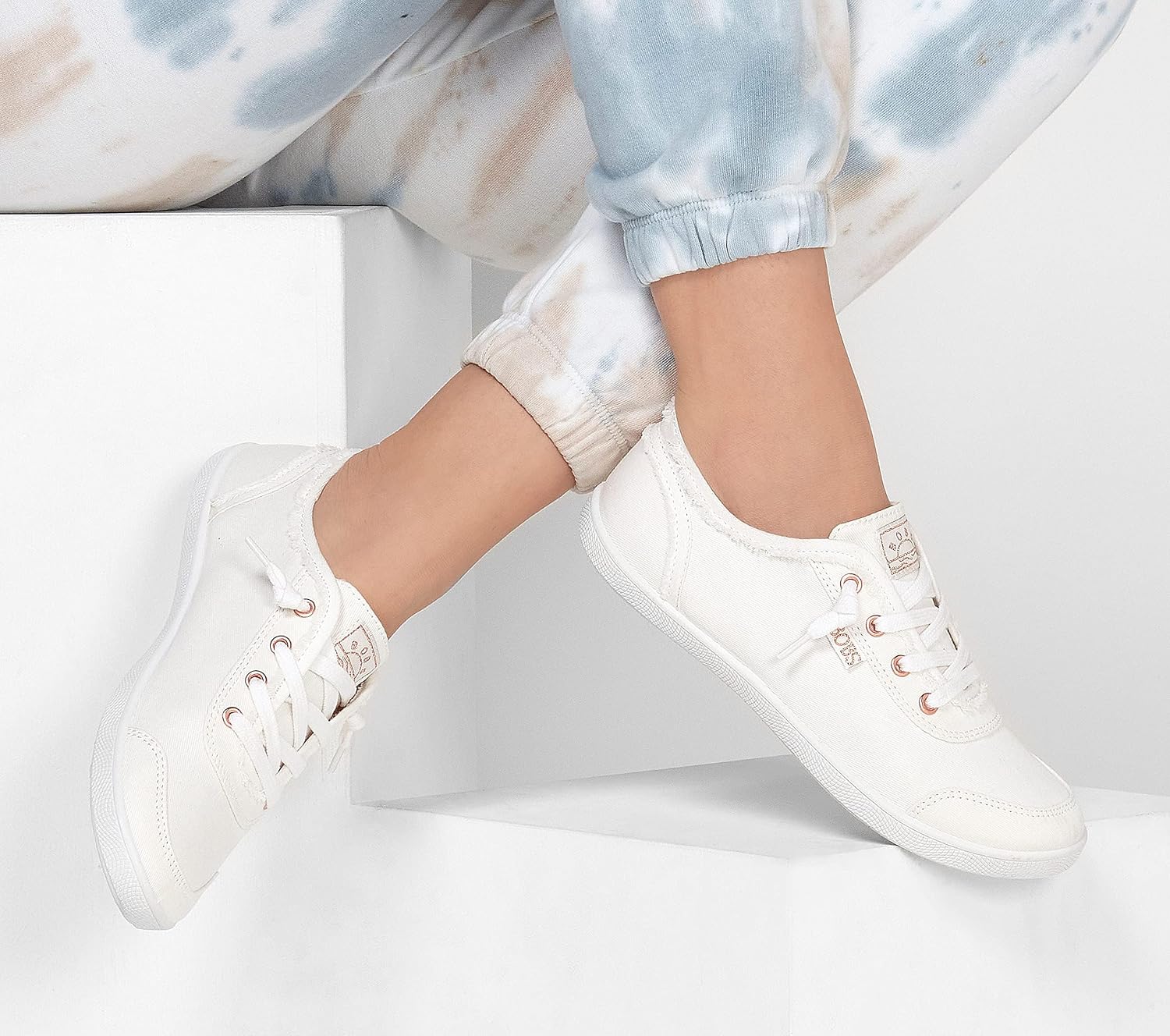
Skechers
$39.99
In stock on Amazon
Check price on AmazonOrthopedic Insoles
“Orthopedic” is technically a claim about foot health, not a material. An orthopedic insole — whether the one built into a New Balance 990 or a third-party aftermarket insert — uses structured foam, rigid or semi-rigid arch supports, and heel cups designed to guide how your foot strikes and loads through each step.
The American Podiatric Medical Association’s consumer guidance document “Proper Footwear” consistently distinguishes between cushioning (adding softness) and support (controlling motion), noting that many people conflate the two. Orthopedic insoles are primarily about support: they hold the arch in a more neutral position, reduce overpronation, and distribute pressure away from high-load zones like the heel and ball of the foot.
Where this matters most: Long days on hard floors, high-mileage walking, or any recurring discomfort in the heel, arch, or the front of the knee. Refinery29’s “These Are the Best Insoles for Sneakers, According to Podiatrists” notes that custom orthotics — the prescription version made from a foot cast — run $400–$800 through a podiatrist’s office, but high-quality over-the-counter orthopedic insoles from brands like Superfeet or Powerstep run $35–$55 and address the same mechanics for most non-clinical cases.
The tradeoff: Orthopedic insoles add stack height — they raise your foot inside the shoe, which changes fit. A shoe already sized snugly may feel too tight once a structured insole goes in. Many buyers don’t account for this and end up with the insole buckled or the shoe uncomfortable in a new way. The rule of thumb cited by podiatrists in Refinery29’s “These Are the Best Insoles for Sneakers, According to Podiatrists”: size up half a size if you plan to run aftermarket orthopedic insoles consistently.
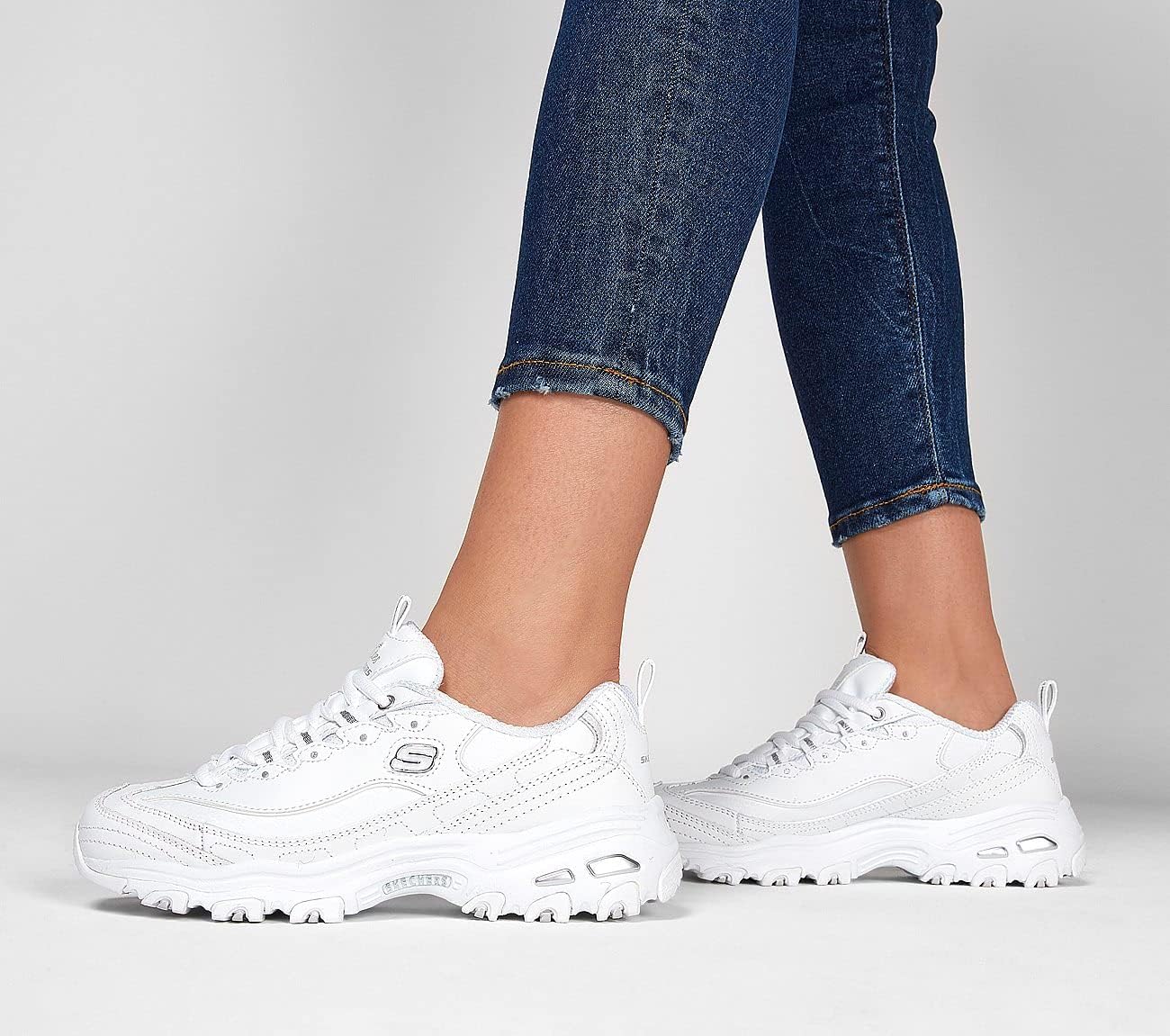
Skechers
$61.67
In stock on Amazon
Check price on AmazonAir Cushioning
Air cushioning — Nike Air units, Adidas Boost (technically expanded TPU beads, not air, though it functions similarly in energy return), New Balance FuelCell, and HOKA’s PROFLY construction — uses pressurized air pockets or energy-return foam cells in the midsole to absorb impact and spring back.
This technology has the highest performance ceiling and the highest price ceiling. Air Max units in Nike’s current lineup add $30–$80 to the retail price over comparable non-Air models. The payoff is meaningful for active use: Hypebeast’s performance-sneaker coverage consistently aggregates long-run reviews showing less leg and foot fatigue on walks and runs over two-plus miles compared to standard EVA foam shoes. Harper’s Bazaar’s “Best Sneakers for Women 2025” reflects similar reader and editor consensus, with the highest-rated all-day active sneakers clustered around air-cushion and energy-return constructions in the $130–$200 range.
The honest limitation: Air cushioning is overkill for low-activity wear, and the units are vulnerable to puncture or slow pressure loss over years of hard use. Unlike foam degradation, a compromised air unit doesn’t fail dramatically — it just quietly stops returning energy, and the shoe becomes a heavier, less responsive version of itself without any visible sign. It also adds bulk: most Air Max-style shoes have a thicker stack that doesn’t work as cleanly under slim-cut trousers or in dress-casual contexts.
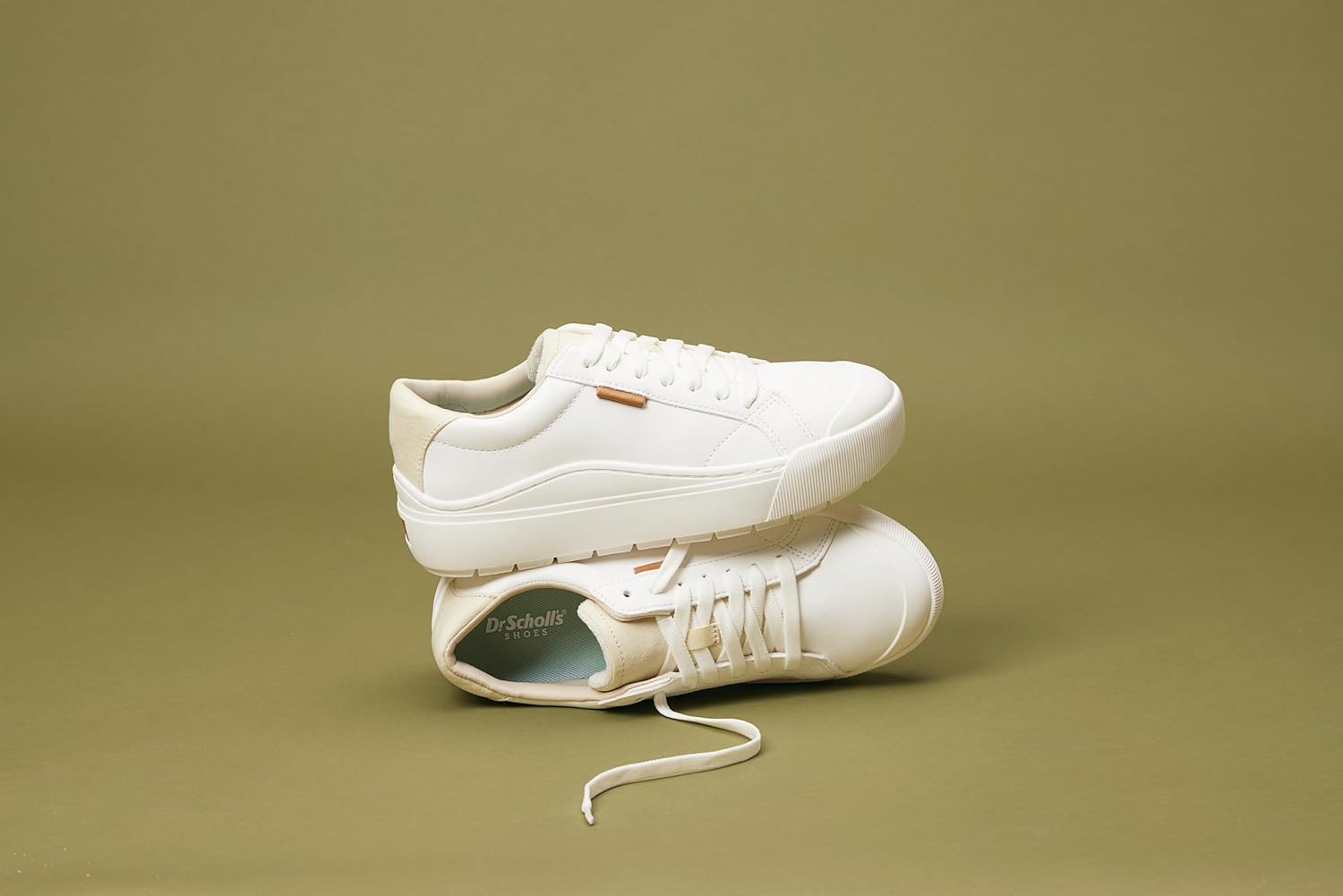
Dr.Scholl's
$75.00
In stock on Amazon
Check price on AmazonThe Price-to-Value Breakdown
| Technology | Typical price add vs. baseline | Useful lifespan (regular wear) | Best use case |
|---|---|---|---|
| Memory foam insole | +$0–$25 | 6–12 months before notable compression | Casual wear, low mileage, on-trend picks |
| Skechers — $39.99 | |||
| OTC orthopedic insole (aftermarket) | +$35–$55 | 12–24 months | Long days, arch/heel fatigue, standing work |
| Skechers — $61.67 | |||
| Air cushioning (built-in) | +$30–$80 | 2–4 years (barring unit failure) | Active use, 2+ miles/day, high-impact activity |
| Dr.Scholl’s — $75.00 |
By the numbers:
- A memory foam sneaker at $85 that needs replacing after 14 months of daily wear: approximately $0.20/day
- The same $85 sneaker paired with a $45 aftermarket orthopedic insole, lasting 2+ years: approximately $0.18/day — and better mechanics
- An air-cushion performance sneaker at $160, lasting 3+ years of consistent active use: approximately $0.15/day at the high end
The math mildly favors orthopedic insoles as an add-on strategy and air cushioning for active buyers — but only if you actually use the shoe at the volume that justifies it.
What Reviewer and Expert Consensus Actually Says
Wirecutter’s “The Best Walking Shoes for Women,” which aggregates podiatrist input alongside multi-month user testing, lands consistently on one conclusion: the combination of light cushioning plus structured arch support outperforms either feature in isolation. Their top picks over recent years have disproportionately featured shoes with a modest foam midsole and a removable insole designed to accept aftermarket orthotics — exactly because that configuration lets the buyer tune both comfort and support independently.
Harper’s Bazaar’s “Best Sneakers for Women 2025” reflects a similar pattern among editors and reader consensus: the highest-rated all-day sneakers tend to fall in the $110–$180 range, feature a dual-layer construction (soft top layer, firmer supportive base), and are designed to accept an aftermarket insole. The brand names vary — On Running, New Balance, HOKA, Asics — but the construction logic is consistent across picks.
Vogue’s “The Most Comfortable Sneakers We’ve Found for All-Day Wear” adds a useful style dimension: air-cushion sneakers, particularly chunky retro runners, currently have the highest style-utility overlap in the market. Wearing a Nike Air Max 90 or a New Balance 990 is both a credible comfort choice and a trend-aligned one, which narrows the “pay the premium or not” question for fashion-motivated buyers who would have been debating the purchase anyway.
Hypebeast’s ongoing performance-sneaker coverage is worth consulting for buyers in the active-use tier: it tracks long-term durability reports on air-cushion and energy-return constructions across multiple seasons, which gives a more reliable lifespan picture than first-impression reviews.
The Decision Framework: If X, Then Y
Here’s where to land based on your actual situation:
If your primary need is cushioned comfort for low-mileage daily wear and you want something stylish under $120: Memory foam is fine. The compression timeline won’t matter much if you rotate pairs. Look for shoes that specify a removable insole — that gives you the option to upgrade to an orthopedic insert later without buying new shoes.
If you’re on your feet for six or more hours, have any recurring arch or heel discomfort, or wear the same pair five-plus days a week: Buy the shoe for fit and style, then invest $40–$55 in an aftermarket orthopedic insole separately. Superfeet Green (for high arches) and Powerstep Pinnacle (for moderate support across most arch types) come up repeatedly in Refinery29’s “These Are the Best Insoles for Sneakers, According to Podiatrists” as the most consistent over-the-counter performers. This combination typically outperforms any single-tech shoe at the same total budget.
If you walk or run two-plus miles daily, work out in your sneakers, or are shopping in the $130–$200 range and want the investment to hold up for three-plus years: Pay for the air cushioning or energy-return foam construction — HOKA’s PROFLY, Adidas Boost, or Nike Air Zoom. The technology earns its markup at high use volumes. You’ll get the best longevity and performance return per dollar.
If you’re buying for style first and comfort is secondary: Don’t pay the air-cushion premium — you’re not logging the miles that make it worth it. A clean low-profile sneaker with a basic foam insole and a $35 aftermarket insole you can swap in for longer days is a smarter budget split.
If you’re buying for someone else as a gift and don’t know their gait or arch type: The safest choice is a shoe designed to accept aftermarket orthotics (wide, flat insole bed with removable liner) in the $100–$150 range, and let the recipient dial in the insole situation themselves. Gifting a specific orthopedic technology without knowing the recipient’s foot mechanics is the fastest route to a well-intentioned but ultimately unworn pair.
The bottom line here isn’t that one technology wins — it’s that each of them answers a different question. Memory foam asks: Is this soft right now? Orthopedic support asks: Is my foot being held correctly over time? Air cushioning asks: Can I recover impact energy at high volume? Match the question to your actual daily life, and the “worth it” calculation becomes straightforward.