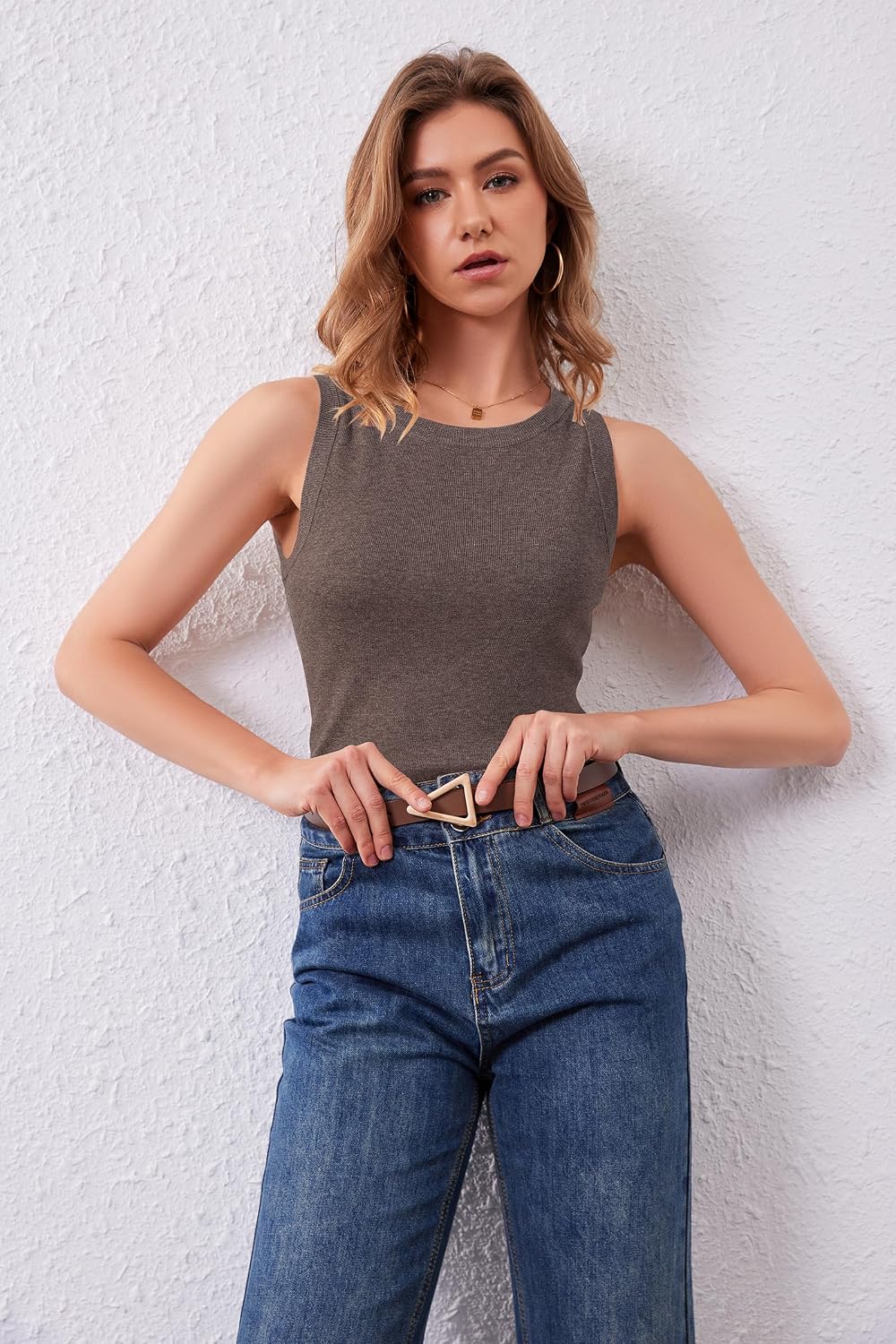
You’re standing in front of two white T-shirts. One is $8. One is $37. They look almost identical on the hanger. So what exactly are you paying for — and is the difference real, or just a brand tax?
The answer lives in the fabric composition label (that small sewn-in tag listing things like “100% cotton” or “60% polyester / 40% rayon”), and once you know how to read it, the price gap starts making sense. Fabric composition describes the blend of fibers used to make a garment — the type, the ratio, and sometimes the grade of those fibers. These numbers determine how a top feels against your skin, how it washes over a year, whether it pills (develops those small fuzzy balls of fiber on the surface), loses its shape, or turns see-through after six months of wear. This article walks you through the actual quality differences tier by tier, so you can stop guessing and start buying with confidence.
The $8–$15 Range: What You’re Actually Getting
At this price point, the economics are pretty brutal. A Business of Fashion analysis of fast-fashion supply chains notes that after manufacturing costs, shipping, retailer margin, and marketing, the actual fabric budget on an $8 tee is often under $1.50. That math forces specific choices.
The most common composition at this tier: 100% polyester, or a polyester-heavy blend like 60% polyester / 35% rayon / 5% spandex. Here’s why that matters in practice:
Polyester is a petroleum-derived synthetic fiber. It’s cheap, holds its shape, and resists shrinking — which sounds like a win. But it doesn’t breathe (meaning heat and moisture get trapped against your skin), it develops a static cling, and it tends to hold odors over time because it’s non-absorbent. Owners of high-polyester basics across aggregated reviews consistently flag pilling as early as the third or fourth wash cycle.
Rayon (also labeled as viscose) is a semi-synthetic fiber made from wood pulp. It has a silky drape and feels cool, which is why fast-fashion brands lean on it. The problem: it’s structurally weak when wet, which means it distorts in the wash and loses its shape. Harper’s Bazaar’s 2025 piece on why cheap tees pill early specifically calls out rayon blends as particularly vulnerable to abrasion damage.
Ring-spun cotton vs. open-end cotton is a distinction most shoppers don’t know to look for, but it’s load-bearing at this tier. Open-end cotton — the kind used in most budget tees — is spun faster and cheaper, producing a coarser, shorter-staple fiber (staple length = the length of individual cotton fibers; longer = smoother, stronger). The result is a fabric that feels slightly rough on skin and pills faster. When a label just says “100% cotton” without specifying ring-spun or combed, it’s almost certainly open-end.
If you’re buying in this tier: set realistic expectations. These are seasonally disposable pieces, or items where fit matters more than longevity — a fitted layer under a blazer, a tee you need for one specific event. Prioritize structure over softness: 100% cotton at this price will hold its shape longer than a rayon blend, even if it feels less luxurious.
The $16–$28 Range: Where Quality Logic Starts to Appear
This is where you start seeing the composition shift in ways that actually affect wear experience. Who What Wear’s fabric guide identifies this mid-tier as the zone where combed ring-spun cotton enters the picture — and that’s a real upgrade worth understanding.
Combed cotton takes the ring-spun process a step further: the fibers are combed to remove short strands and debris before spinning. The result is a denser, smoother, stronger yarn with a noticeably softer hand (the way fabric feels to the touch). A combed ring-spun cotton tee at 180–200 GSM (grams per square meter — the standard measure of fabric weight; higher = thicker and more opaque) reads as substantially more premium than an open-end cotton shirt at the same weight.
Common compositions at this tier:
- 100% combed ring-spun cotton: Best choice for breathability and durability. Look for GSM of 160–200 for a tee that’s not see-through but still moves with you.
- 50/50 cotton-polyester blends: More affordable to produce, resistant to shrinking, holds color well — but the synthetic component brings back the breathability trade-off. This is a reasonable pick if you’re washing frequently and need the piece to stay looking fresh, but it won’t feel as good against bare skin as a high-cotton composition.
- Pima or Supima cotton: These are long-staple cotton varieties (Supima is U.S.-grown Pima cotton, a trademarked designation). The longer fiber length means the yarn is naturally stronger and softer with fewer protruding fiber ends — which is what causes pilling. Refinery29’s 2024 guide to quality basics specifically flags Supima cotton as the clearest value-per-dollar quality signal in the $20–$30 range.
Spandex addition (usually 1–5%) in this tier is worth noting: a small spandex percentage adds stretch and recovery — meaning the fabric springs back to shape after wear rather than going saggy at the neckline. For fitted or ribbed basics, this is a practical positive. For boxy or oversized silhouettes, it’s less relevant.
If you’re buying in this tier: prioritize combed ring-spun or Pima/Supima cotton over blends. The handfeel difference is immediately apparent in-store or when unboxing, and aggregated reviews across brands consistently report significantly better wash durability versus the same-tier blended option.
The $29–$65 Range: The Markup Breakdown
Here’s where the fashion economics get interesting — and where being a smart shopper requires understanding what you’re actually paying for beyond fiber content.
The fiber story at this tier typically involves one or more of the following: Supima or long-staple Egyptian cotton, modal (a type of rayon made from beech tree pulp, but significantly more durable and breathable than standard viscose rayon), TENCEL™ Lyocell (a branded lyocell fiber produced in a closed-loop process, softer than cotton with better moisture management), or merino wool blends for tees positioned as temperature-regulating.
Modal deserves special attention here. Vogue’s 2025 editor roundup of best white tees calls out modal-cotton blends (typically 50/50 or 60/40 modal-cotton) as consistently outperforming their price in the $30–$50 range. Modal is twice as soft as cotton, holds its shape through repeated washing, resists pilling, and retains color significantly better. The trade-off: it’s more expensive to source and process, which is exactly why you don’t see it at the $8 tier.
TENCEL™ appears in tops positioned as sustainability-adjacent (the closed-loop manufacturing process uses significantly less water than conventional cotton). The material is exceptionally smooth and has a subtle sheen, making it read as elevated. Owners report it wears cool and drapes beautifully — but it’s more delicate than cotton and often requires more careful washing.
The honest markup breakdown: At $40+, you are paying for some combination of:
- Better raw fiber (modal, Supima, TENCEL™ — all carry material cost premiums over commodity cotton or polyester)
- Higher GSM / heavier fabric construction
- Finishing details (reinforced stitching at stress points, taped seams, quality-controlled dye lots that resist fading)
- Brand positioning and marketing overhead
Business of Fashion’s analysis of fashion manufacturing economics suggests that at a $40 retail price, roughly $8–$12 might represent actual garment cost in a premium-branded scenario, versus $3–$5 at mass market. That gap is real — and it does translate into quality signals — but it’s not a 1:1 relationship. A $40 tee from a direct-to-consumer brand with lean marketing spend will often deliver better fabric than a $55 tee from a brand with a large retail footprint.
If you’re buying in this tier: the composition label should explicitly name the fiber quality. If it just says “100% cotton” with no further specification at $40+, that’s a red flag — a brand confident in their materials names them. Look for modal, Supima, Pima, TENCEL™, or long-staple designations. Absence of these terms at this price usually means you’re paying for brand equity, not fabric.
A Quick Numbers Reference
| Price Tier | Common Composition | Typical GSM | Key Quality Signal |
|---|---|---|---|
| $8–$15 | Polyester blend or open-end cotton | 120–150 | Low — expect short lifespan |
| $16–$28 | Combed ring-spun or Pima cotton | 155–200 | Combed/Pima label = meaningful upgrade |
| $29–$65 | Modal, Supima, TENCEL™, or modal-cotton blend | 170–220+ | Fiber should be named explicitly on label |
The Decision Rules
You’ve got a tee under consideration. Here’s how to route the decision:
If the price is under $15 and the label says “100% cotton”: Fine for layering and short-cycle use. Avoid if you’re buying it as a go-to daily driver — the open-end construction won’t hold up.
If the price is $16–$28 and the label says “combed ring-spun” or “Pima/Supima”: Buy it. This is the strongest value-per-dollar window in the category, and Harper’s Bazaar’s reporting on fast-fashion fabric degradation consistently supports the performance difference of these fiber types over 20+ wash cycles.
If the price is $30+ and the label says “100% cotton” without further specification: Ask more questions — or pass. At this price, the brand owes you a named fiber quality.
If the price is $30+ and you see modal, TENCEL™, or Supima named: The price is justifiable on material grounds. Factor in how you’ll wash it (modal and TENCEL™ benefit from cold/gentle cycles) and whether the brand’s construction quality — stitching, seam finish, neckline construction — matches the fiber story.
If resale matters to you at all: Basic tops have near-zero secondary market value unless they’re brand-specific collector items. This isn’t a resale play. Optimize entirely for cost-per-wear, not exit value.
One final note: the labels don’t lie, but they don’t always tell the full story. A 100% Supima cotton tee cut too thin (under 150 GSM) will still be see-through and disappointing. Fabric composition is the primary variable — but construction weight and finish are the secondary checks that confirm whether a brand actually did something with good materials. When you find both lining up, that’s when the $37 tee earns every dollar.